
Calories 3 min read
Dal Bhat Calories: How to Estimate Your Nepali Plate
A practical method for tracking dal bhat, momo, chiura and cooking oil without treating every home-cooked plate as identical.
Published Updated By The Fitness Court
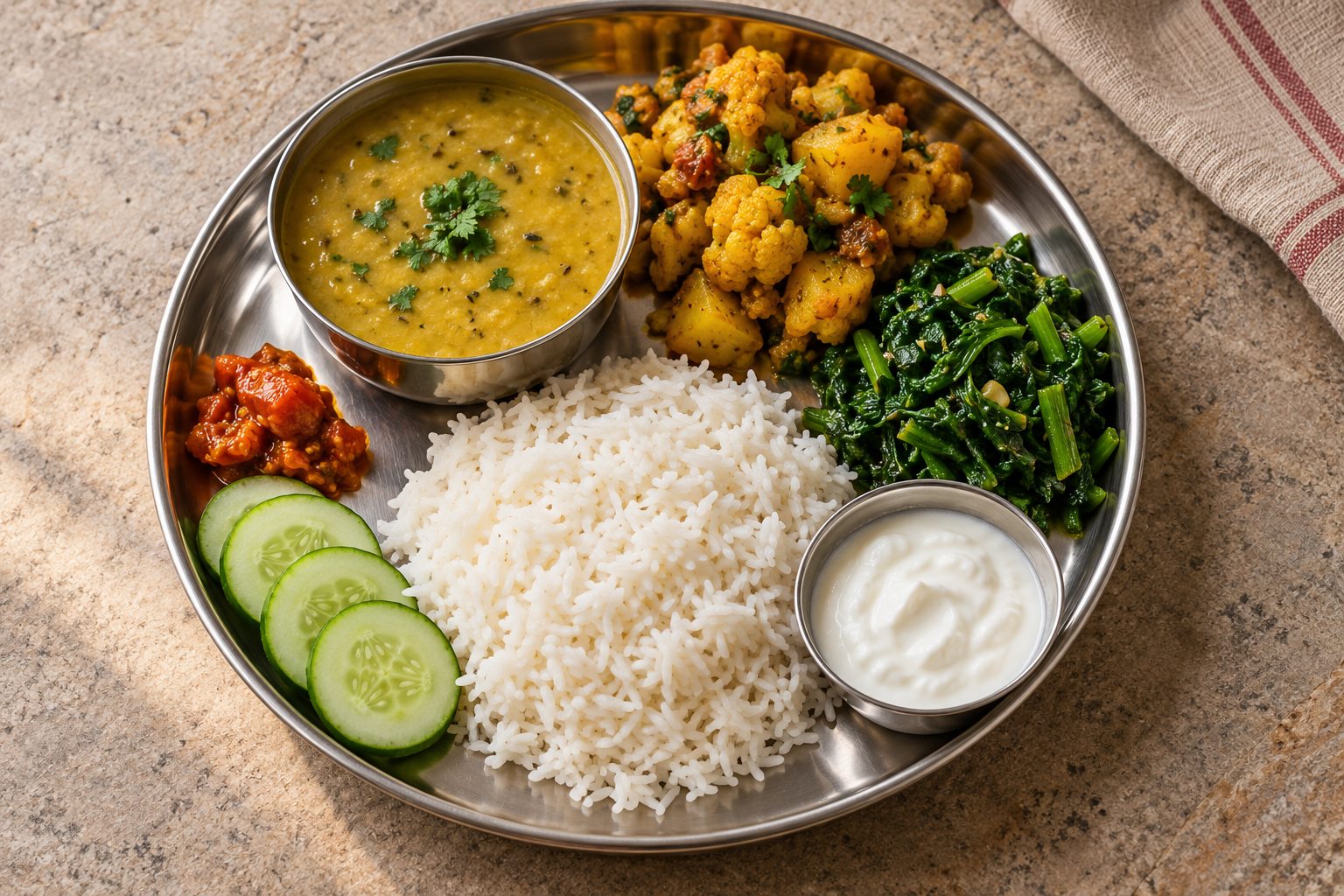
There is no single accurate calorie count for a plate of dal bhat. The amount of rice, thickness of the dal, oil in the tarkari and extra servings can change the total substantially. A useful estimate starts with your recipe and serving size, not a universal number copied from a search result.
Break the plate into ingredients
Record the rice, dal, vegetables, oil or ghee, achar and any meat or dairy separately. Use a food label or a consistent food composition database. Make sure the entry matches the food: uncooked rice and cooked rice contain different amounts of water per 100 g.
If a pot is shared, estimate the calories for all the ingredients and divide by the share you eat. Record second helpings too. Consistency is more useful than pretending a home-cooked meal can be measured perfectly.
Use a worked recipe calculation
Suppose your chosen database gives a recipe total of 1,800 kcal, and you divide the cooked dish into six equal portions. Each portion is approximately 300 kcal. If you take one and a half portions, log approximately 450 kcal. These numbers demonstrate the method; they are not nutrition values for a particular Nepali dish.
Weigh the finished pot if you want a finer estimate. Divide recipe calories by cooked weight, then multiply by your serving weight. Water changes the final weight but does not add calories.
Why momo, chiura and sel roti estimates vary
Momo size, wrapper thickness, filling and cooking method vary between kitchens. Fried momo also involves added oil. Chiura is dry and compact, so a bowl can hold more food than you expect. Sel roti recipes differ in sugar, size and absorbed frying oil.
For restaurant food, use a comparable entry and accept a range of uncertainty. Avoid compensating for an uncertain restaurant meal by skipping food the next day. Return to your normal routine and judge longer-term progress.
Use tracking to make one useful change
After a few typical days, look for a change you can repeat: measure oil, make rice portions more consistent, or replace a sugary drink. Keep vegetables and a protein source in your meals. Calorie tracking is optional; regular portions and a sustainable eating pattern can also be useful.
Tracking is not appropriate for everyone. If it creates anxiety or you have a history of disordered eating, seek support and use a less numerical approach with a qualified professional.
Sources and further reading
General information for adults, not an individual nutrition or training prescription.